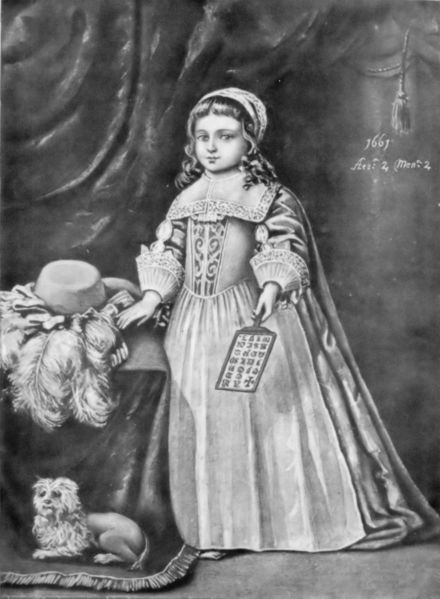
 Hornbooks and battledores were two early literacy teaching aids. A hornbook was a primer for children, use from the 15th to the 18th century, consisting of a sheet of paper (or parchment) mounted on a thin wooden paddle, usually with a handle that was perforated so that the hornbook could be hung at the child’s girdle, or belt. The sheet usually had the alphabet, some pairs of letters, and a religious verse, often the Lord's Prayer. Because paper was so expensive, parents and teachers wanted to protect it. So they covered the paper with a very thin piece of cow's horn which was so thin, you could see right through it. Thus, the name, hornbook came to be used to describe this type of “book.”
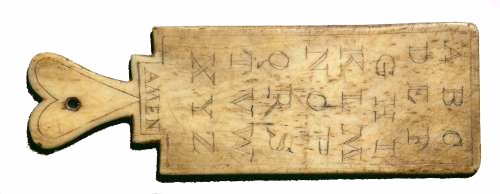
Not all hornbooks were the same. Many were made out of metal, sometimes even silver. Others had the alphabet carved into paddles made of ivory (photo above). One special kind of hornbook was made out of gingerbread. As children learned each letter of the alphabet, they were rewarded with letters to eat.
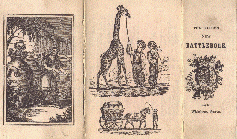 Once the price of paper became cheap, companies started to make battledores. Battledores was an early form of badminton played with a flat wooden paddle and a shuttlecock. The paddle was probably similar in shape/size to hornbooks, thus, the word probably seemed appropriate as the name for the new book form which derived from them. Popular in the 1800's, battledores were made of thin cardboard. Although some battledores were made in the shape of a hornbook, the card was usually cut into the shape of a rectangle and then folded in
thirds.
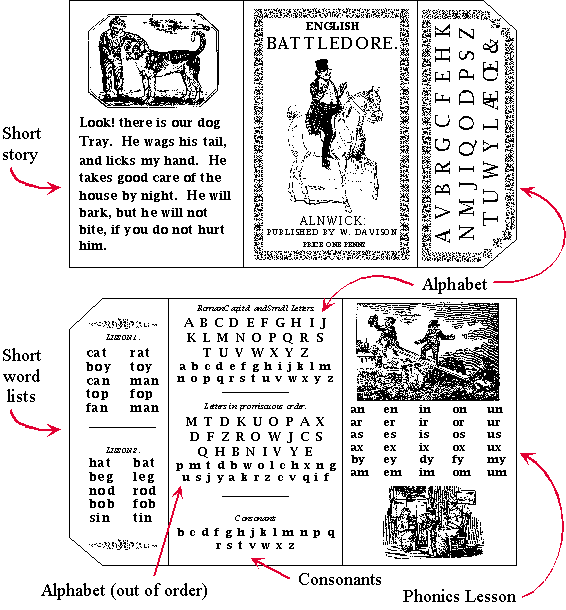
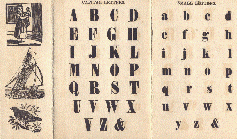 The content of a battledore was similar to that of a hornbook, including the alphabet in both capital and small letters and pairs of letters as a phonics lesson. But, unlike the hornbook, battledores frequently had a mixed-up alphabet with the letters out of order as a way to help children distinguish individual letters. They also had lists of short words and sometimes included a prayer, but normally they had a short story or fable instead. With a greater surface area, battledores could contain illustrations. These were generally pictures of everyday life that would have been familiar to children of the time.